
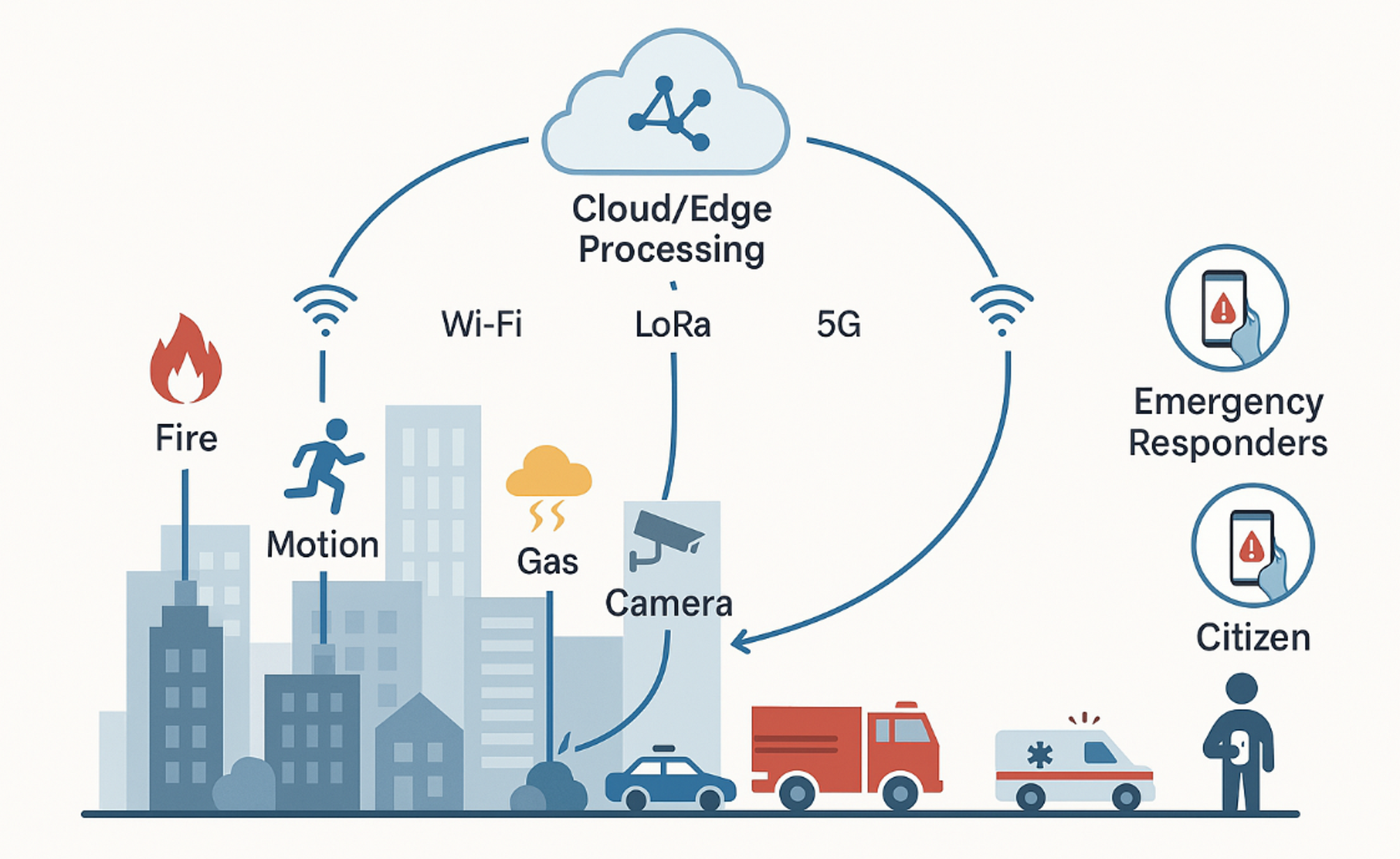
Technological innovations and evolving requirements create transformative market opportunities continuously. The IoT For Public Safety Market Trends indicate significant capability transformations occurring rapidly today. The IoT For Public Safety Market size is projected to grow USD 7.879 Billion by 2035, exhibiting a CAGR of 12.82% during the forecast period 2025-2035. Artificial intelligence integration transforms public safety IoT with intelligent analytics capabilities. Computer vision enables automated object and behavior recognition in video streams. Machine learning improves threat detection accuracy while reducing false positive alerts. Natural language processing analyzes communications for threat intelligence generation purposes. Predictive policing algorithms identify crime hotspots enabling proactive patrol deployment.
Connected first responder technologies emerge as significant market trend advancing. Smart helmets provide augmented reality information overlay for firefighters during operations. Body-worn sensors monitor vital signs alerting command to responder distress. GPS tracking enables precise location awareness for officer safety purposes. Connected weapons systems log firearm usage for accountability and training. Mesh networking ensures communication in environments with infrastructure damage present.
Drone integration represents transformational trend for public safety operations continuously. Unmanned aerial vehicles provide aerial surveillance for large event security coverage. Drones deliver emergency supplies to inaccessible disaster areas effectively. Thermal imaging drones locate missing persons in search and rescue operations. First responder drones arrive before personnel enabling rapid situation assessment. Autonomous drone patrol routes provide continuous monitoring of critical areas.
Privacy and cybersecurity concerns reshape public safety IoT implementation approaches substantially. Data protection regulations influence surveillance system design and data retention policies. Encryption requirements protect sensitive public safety communications and data thoroughly. Cybersecurity frameworks protect critical infrastructure from malicious attacks comprehensively. Community oversight mechanisms address surveillance technology privacy concerns appropriately. Transparency initiatives build public trust in connected public safety technologies.
Top Trending Reports -
GCC Deep Packet Inspection Market

 English
 Arabic
 French
 Spanish
 Portuguese
 Deutsch
 Turkish
 Dutch
Dutch
 Italiano
 Russian
 Romaian
 Portuguese (Brazil)